Phishing Isn't getting Smarter
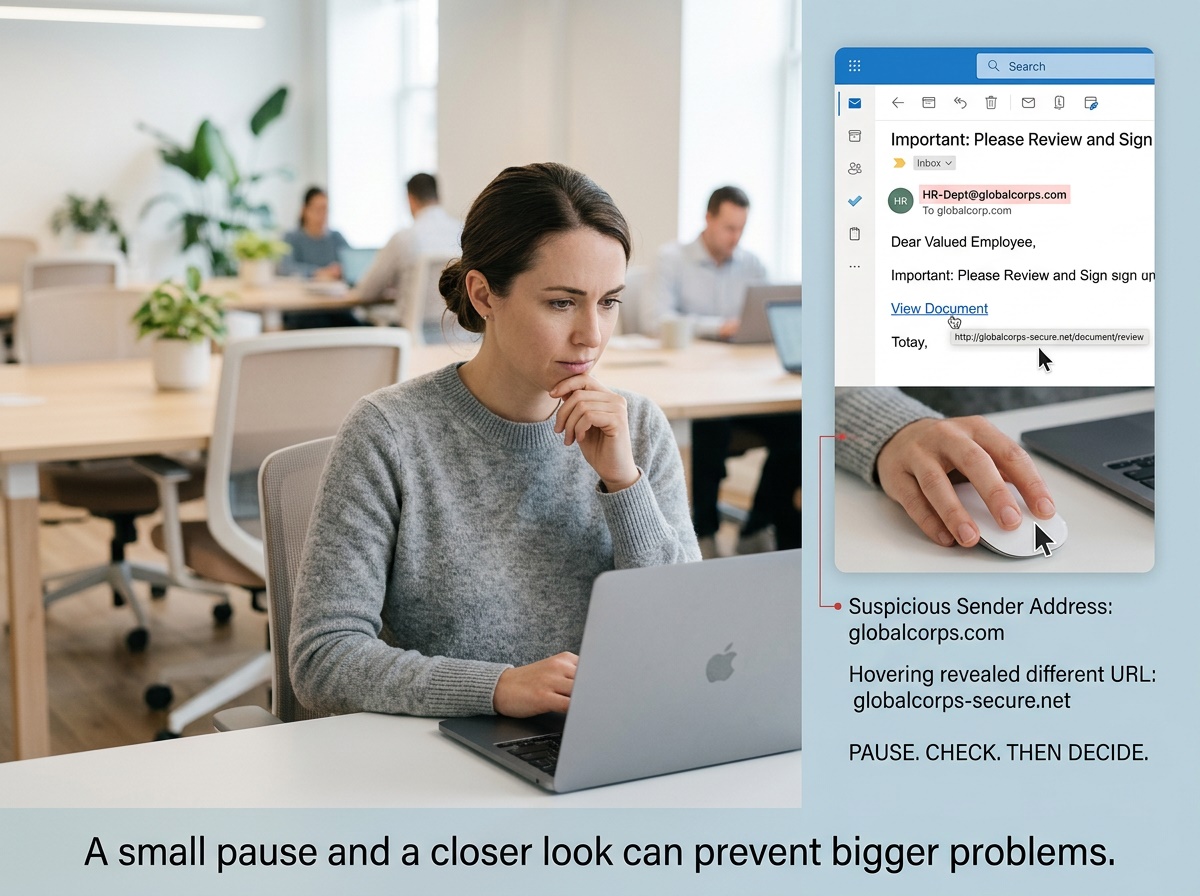
Let’s face it: most people don’t think of themselves as targets for cyberattacks. But phishing is one of the most common ways hackers get access, and it starts with something simple. Phishing is when someone pretends to be a trusted person or company to trick you into clicking a link, opening a file, or sharing information like a password. It may cost a little convenience to slow down and double-check a message, but the alternative, dealing with a hacked account or compromised data, is far more painful.
What Phishing Looks Like Today
Phishing is no longer obvious. These messages often look like normal emails or texts you receive every day. They might appear to be:
- A message from a coworker asking for help
- An email from a vendor about an invoice
- A notice from IT asking you to reset your password
The goal is to look normal enough that you do not question it.
Why Phishing Works
Phishing works because it sounds human. Attackers write messages that feel familiar, urgent, or helpful. Common tricks include:
- Creating urgency, like saying something will be locked or delayed
- Using real names or job titles
- Referencing work you actually do
When people are busy, these messages are easy to trust.
One Small Action Can Cause Big Problems
Phishing does not require technical skills from the attacker. It only takes one action from the user. That might be:
- Clicking a link
- Opening an attachment
- Typing your password into a fake website
- Replying with sensitive information
Once attackers have access, they can read emails, send messages as you, or access other systems.
Why Security Tools Are Not Enough
Email filters help block many phishing messages, but no system catches everything. Some phishing emails are designed to slip through and look completely legitimate. That is why people remain the final line of defense.
How Organizations Reduce Phishing Risk
The most effective protection uses a few simple layers:
- Teaching users what phishing looks like
- Using strong passwords and multi-factor authentication
- Verifying identity before approving sensitive requests
Each layer helps reduce the chance that one mistake becomes a major incident.
The Bottom Line
Phishing is successful because it feels normal. Slowing down, questioning unexpected messages, and asking for verification can stop an attack before it starts. A few extra seconds can make a big difference.
Take Action Today
Phishing attacks are not going away, but their impact can be reduced. Call CompuTech today to discuss tools and training that help protect your organization and make phishing easier to spot.